
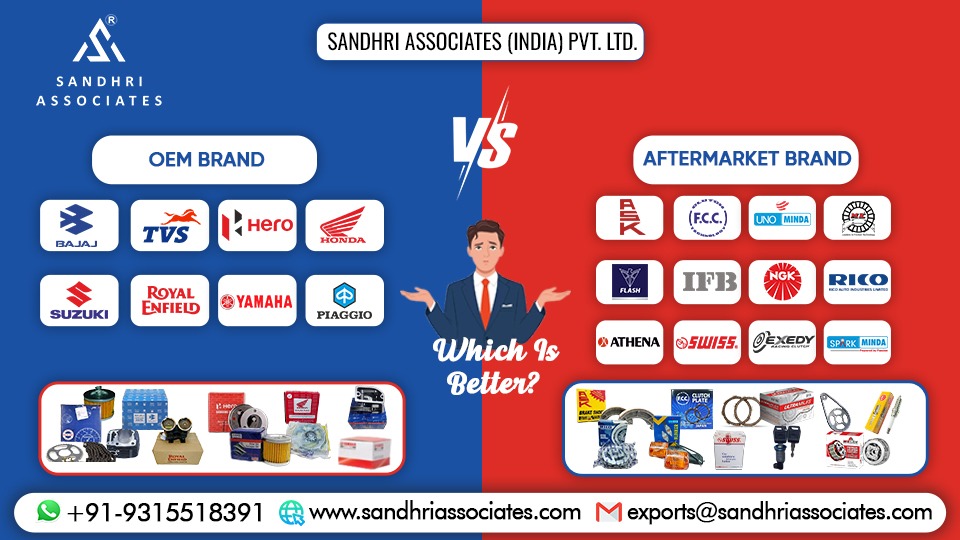
When sourcing spare parts for motorcycles, scooters, and three-wheelers, one of the most common questions buyers ask is: OEM vs aftermarket spare parts—which is better?
For importers, distributors, wholesalers, and retailers, the answer depends on factors such as quality expectations, pricing, market demand, and business goals. Both OEM and aftermarket spare parts have advantages, and understanding their differences can help businesses make smarter purchasing decisions.
This guide explains the key differences between OEM and aftermarket spare parts and helps you determine which option is best for your market.
What Are OEM Spare Parts?
OEM stands for Original Equipment Manufacturer.
OEM spare parts are produced according to the original specifications of the vehicle manufacturer. These parts are designed to match the exact fit, quality, and performance of the original component installed in the vehicle.
Benefits of OEM Spare Parts
- Exact fit and compatibility
- Consistent product quality
- Reliable performance
- Lower installation risks
- Strong customer confidence
OEM parts are often preferred by customers who want original-quality replacements.
What Are Aftermarket Spare Parts?
Aftermarket spare parts are manufactured by independent companies rather than the original vehicle manufacturer.
These parts are designed to replace original components and are available in a wide variety of quality levels and price ranges.
Benefits of Aftermarket Spare Parts
- Competitive pricing
- Wider availability
- Extensive product range
- Strong market demand
- Higher profit opportunities
Many premium aftermarket manufacturers produce products that meet or exceed industry standards.
OEM vs Aftermarket Spare Parts: Key Differences
Why Understanding the Difference Matters
| Feature | OEM Parts | Aftermarket Parts |
|---|---|---|
| Manufacturer | Original manufacturer | Independent manufacturer |
| Fitment | Exact fit | May vary by supplier |
| Pricing | Usually higher | Generally lower |
| Availability | Limited in some markets | Widely available |
| Product Variety | Limited | Extensive |
| Profit Margin | Moderate | Often higher |
Understanding these differences helps businesses choose the right products for their customers.
Which Offers Better Quality?
Quality depends on the manufacturer.
OEM parts are designed according to original vehicle specifications and offer consistent quality.
However, many reputable aftermarket manufacturers also produce high-quality components that perform exceptionally well.
Quality Considerations
- OEM parts offer original specifications.
- Premium aftermarket parts can provide excellent performance.
- Supplier selection is critical in both categories.
The best approach is to source products from trusted and experienced suppliers.
Which Is More Cost-Effective?
In terms of pricing, aftermarket spare parts generally offer better value.
OEM Parts
- Higher purchase cost
- Strong brand recognition
- Premium customer segment
Aftermarket Parts
- Lower acquisition cost
- Competitive pricing
- Higher profit potential
For many importers and distributors, aftermarket parts provide greater flexibility and profitability.
Which Has Better Availability?
Availability is a major factor in the spare parts business.
OEM parts can sometimes be difficult to source in certain regions due to supply limitations.
Aftermarket parts are often easier to obtain because multiple manufacturers produce them.
Availability Benefits of Aftermarket Parts
- Larger inventories
- Multiple sourcing options
- Faster replenishment
- Better supply continuity
This makes aftermarket products attractive for businesses that require consistent stock availability.
Which Option Do Customers Prefer?
Customer preferences vary by market.
Customers Often Choose OEM Parts When:
- Original specifications are important
- Premium quality is required
- Warranty considerations exist
- Vehicle restoration projects are involved
Customers Often Choose Aftermarket Parts When:
- Affordability is a priority
- Parts need quick replacement
- Bulk purchases are required
- Value for money is important
Understanding local market demand helps businesses stock the right products.
Why Many Importers Sell Both
Successful importers and distributors often offer both OEM and aftermarket spare parts.
Benefits of Offering Both Categories
- Wider customer reach
- Increased sales opportunities
- Better inventory flexibility
- Improved market competitiveness
- Higher customer satisfaction
A diversified product range helps businesses serve multiple customer segments.
Popular OEM and Aftermarket Spare Parts Categories
Some of the most commonly sourced spare parts include:
Engine Components
- Piston Kits
- Cylinder Kits
- Clutch Assemblies
- Gasket Sets
Electrical Parts
- Ignition Coils
- Wiring Harnesses
- Switch Assemblies
- Sensors
Brake Components
- Shoes Brake
- Pads Brake
- Brake Cables
- Brake Disc Parts
Suspension Parts
- Front Fork Components
- Shock Absorbers
- Bearings
These products generate strong demand in both OEM and aftermarket categories.
Common Challenges When Selecting Spare Parts
Businesses may face challenges such as:
- Inconsistent product quality
- Supply chain disruptions
- Pricing fluctuations
- Counterfeit products
- Customer preference variations
Careful supplier selection helps minimize these risks.
Why Choose Sandhri Associates
Sandhri Associates supplies OEM and premium aftermarket spare parts for motorcycles, scooters, and three-wheelers worldwide.
We Offer:
- OEM & aftermarket spare parts
- Competitive wholesale pricing
- Consistent stock availability
- Export-quality packaging
- Worldwide shipping support
- Dedicated customer service
Our goal is to help importers and distributors source reliable spare parts for their markets.
Conclusion
So, OEM vs aftermarket spare parts—which is better?
The answer depends on your market, customer requirements, and business objectives.
OEM parts provide original quality and exact compatibility, while aftermarket parts offer affordability, wider availability, and strong profit potential.
For many importers and distributors, the most effective strategy is to offer both options and meet the needs of different customer segments.
By focusing on quality, supplier reliability, and market demand, businesses can build a profitable and sustainable spare parts portfolio.
Get Started
- Email:exports@sandhriassociates.com
- WhatsApp: +91-9315518391
- Address: T-2527, Gurunanak Market, Faiz Road, Karol Bagh, Delhi – 110005
Follow Us On: