
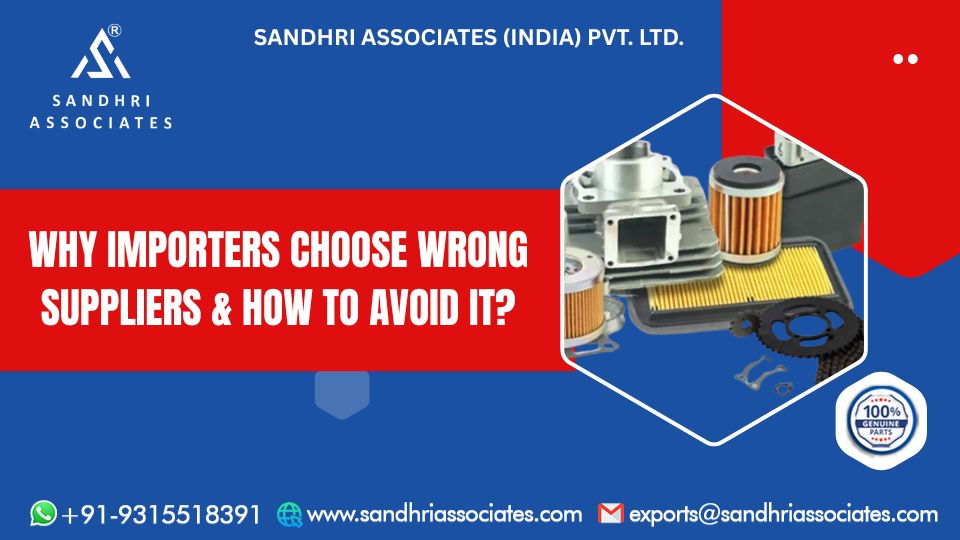
In the global trade business—especially in industries like automotive spare parts—choosing the right supplier is one of the most critical decisions an importer can make. Yet, many importers end up partnering with the wrong suppliers, leading to delays, losses, and damaged business relationships.
If you are importing products such as spare parts for models from Bajaj Auto or other leading manufacturers, selecting the wrong exporter can directly impact your reputation and profitability.
This blog explores why most importers make this mistake and, more importantly, how you can avoid it.
Why Importers Often Choose the Wrong Supplier
1. Focusing Only on Price
One of the most common mistakes importers make is choosing suppliers based solely on the lowest price.
While lower pricing may seem attractive initially:
- It often results in compromised quality
- Hidden costs may arise later (returns, replacements, delays)
- It can damage your brand reputation in your local market
Reality: The cheapest supplier is rarely the most reliable.
2. Ignoring Quality Verification
Many importers fail to properly check product quality before placing bulk orders.
This leads to:
- Receiving substandard or mismatched parts
- Customer complaints and returns
- Loss of long-term clients
Common issue in spare parts business: Slight variations in quality can affect performance and durability significantly.
3. Lack of Proper Communication
Poor communication is another major red flag that importers often overlook.
Signs include:
- Delayed responses
- Unclear answers about product specifications
- No proper documentation or confirmation
This usually results in misunderstandings, wrong shipments, or incomplete orders.
4. Not Checking Export Experience
Not all suppliers are experienced in handling international shipments.
Problems caused by inexperienced exporters:
- Incorrect packaging
- Documentation errors
- Customs clearance delays
Exporting is not just about supplying products—it requires logistics expertise.
5. No Long-Term Vision
Some importers treat sourcing as a one-time transaction instead of building long-term partnerships.
This results in:
- Inconsistent supply
- Fluctuating pricing
- No priority during high-demand periods
A short-term approach often leads to unstable business growth.
Real Impact of Choosing the Wrong Supplier
Selecting the wrong supplier can have serious consequences:
- Delayed shipments are affecting your market supply
- Financial losses due to unsellable or defective products
- Loss of customer trust and credibility
- Increased operational stress
For importers dealing in high-demand products like two-wheeler spare parts, these issues can quickly disrupt business operations.
How to Avoid Choosing the Wrong Supplier
1. Prioritize Quality Over Price
Always evaluate:
- Product durability
- Consistency in manufacturing
- Packaging standards
Paying slightly more for reliable quality ensures long-term profitability.
2. Request Samples Before Bulk Orders
Never skip the sampling process.
Check:
- Material quality
- Fitment accuracy
- Performance standards
This small step can prevent major losses.
3. Evaluate Communication and Responsiveness
A professional supplier will:
- Respond quickly
- Provide clear information
- Share proper documentation
Good communication reflects operational reliability.
4. Verify Export Capabilities
Ensure your supplier:
- Has experience in international shipping
- Understands export documentation
- Provides secure packaging
This is especially important for markets like the United Arab Emirates and other global regions.
5. Build Long-Term Relationships
Instead of switching suppliers frequently:
- Develop trust with one reliable exporter
- Negotiate better pricing over time
- Ensure priority supply during peak demand
Long-term partnerships lead to stability and growth.
Signs of a Reliable Spare Parts Supplier
Look for these qualities when selecting a supplier:
- Proven export experience
- Consistent product quality
- Transparent pricing
- Wide product range
- Ability to handle bulk orders
- Strong communication and support
A supplier with these qualities becomes a business partner, not just a vendor.
Strategic Approach for Importers
Successful importers follow a structured sourcing strategy:
- Research multiple suppliers before finalizing
- Compare quality, not just price
- Start with small trial orders
- Scale gradually based on performance
- Maintain backup suppliers for risk management
This approach minimizes risk and ensures consistent growth.
Final Thoughts
Choosing the wrong supplier is one of the most expensive mistakes an importer can make. While price may seem like the most important factor, long-term success depends on reliability, quality, and trust.
In competitive industries like automotive spare parts, your supplier directly impacts your business reputation and customer satisfaction.
By focusing on quality, communication, and long-term partnerships, you can avoid common sourcing mistakes and build a strong, profitable import business.
Ready to Work with a Reliable Spare Parts Exporter?
If you want consistent quality, timely delivery, and bulk supply support, it’s time to partner with the right exporter.
Send your bulk inquiry today and build a supply chain you can trust.
Get Started:
- Email:exports@sandhriassociates.com
- WhatsApp: +91-9315518391
- Address: T-2527, Gurunanak Market, Faiz Road, Karol Bagh, Delhi – 110005
Follow Us On:
Facebook, Instagram, YouTube, LinkedIn
A delayed spare parts shipment is not just a logistics issue—it’s a business risk. From lost sales and damaged reputation to operational stress and long-term losses, the impact is real and often underestimated.
For importers, the key to success lies in choosing the right export partner—one who understands the importance of timelines, consistency, and commitment.